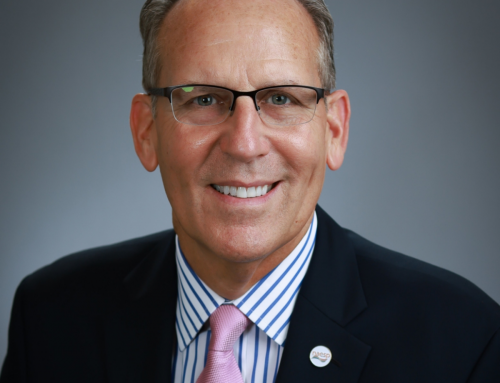
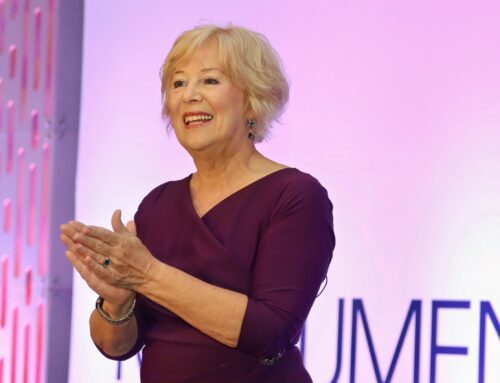
Q&A with Stephanie Morris, Executive Director, National Association of Elementary School Principals (NAESP)
- As you step into your new role as executive director of NAESP, what are you hearing from your members about the importance of investing in and strengthening public education?
One of the best parts of my first few months at NAESP has been the opportunity to listen to principals, leaders, past presidents, partners, and people who have spent their careers championing public education.
And what I hear again and again is that principals believe deeply in the promise of public schools. They also know that fulfilling that promise requires investment not only in programs and resources, but in people.
We ask an extraordinary amount of principals today. They are instructional leaders, culture builders, talent developers, communicators, problem-solvers, advocates, and sometimes traffic directors before 8 a.m.! They are responsible for creating the conditions in which teachers can teach and children can thrive.
If we want strong public schools, we have to invest in the people who lead them. That means preparation, mentoring, professional learning, strong leadership pipelines, and policies that give principals the support they need to do their jobs well.
Investing in public education is ultimately an investment in our children and in the strength of our communities. Our principals understand that perhaps better than anyone because they see the impact every single day.
- How can the field work together to tell a shared story about the value and promise of public schools?
We have to get much better at telling our own story, and we can’t assume people already know it.
Every day, extraordinary things are happening in public schools across this country. Children are discovering what they’re capable of. Teachers are changing lives. Principals are building communities where students and families feel they belong. Schools are solving incredibly complex problems, often with limited resources and very little fanfare.
Those stories need to be told. (As an aside, this is exactly why we developed the National Gold Star School program, to recognize the great work being done to foster learning culture.)
School leaders are well-positioned to be the messengers of this good news. We’ll be working with our members in the coming months to help enhance their abilities and opportunities to effectively share their school’s successes with a wider audience.
But I also think we have an opportunity as a field to connect those individual stories to a larger shared narrative. Public schools are one of the few institutions in America that open their doors every morning and say: Every child belongs here. Come in. We will teach you. We will help you grow. We will help you discover what is possible.
That’s an incredibly powerful promise, and frankly, I think it’s what makes our country better every day and truly what sets us apart.
Organizations like those represented in the Learning First Alliance (LFA) can help amplify that story together. We won’t always agree on every issue or every approach and that’s okay. But there is tremendous power in speaking collectively about the value of public education and the people who make it possible.
- October is National Principals Month. What’s something people should know about today’s principal, and how can we show our appreciation and support, particularly this month?
First, today’s principal is doing approximately 47 jobs at any given moment and I’m only slightly exaggerating!
But what I really wish more people understood is the extraordinary influence a principal has on an entire school community.
Great principals don’t simply manage buildings. They create culture.
Great principals also develop teachers. They build trust with families. They set expectations for what children can achieve. They create environments where people feel valued, supported, and inspired to do their best work.
And so, during National Principals Month, absolutely thank your principal. Send the note. Bring the coffee. Give them a shoutout on social media. We are very much in favor of all of those things!
We believe that you can never thank principals enough. And while we celebrate all principals for the tremendous work they do, we want to shout out the 2026 class of NAESP National Distinguished Principals who we will be honoring in person in Washington, D.C., Oct. 15-16.
But let’s go further than appreciation. Let’s support principals.
Listen to them when policies affecting schools are being developed. Invest in their professional growth. Give them the resources and flexibility they need to lead. And recognize that supporting a principal has a multiplier effect: When we strengthen school leaders, we strengthen teachers, schools, communities, and ultimately opportunities for children.
- You’re also a new board member of the Learning First Alliance. Where do you see opportunities for LFA and its members to work together, and what perspectives do you hope to bring to the table?
I’m genuinely excited about this opportunity because I believe collaboration across the education community is more important than ever.
Each LFA organization brings a different perspective and constituency to the table, but we share something fundamental: a belief in public education and in the educators and leaders who make it work every day.
I see tremendous opportunity to identify the places where our voices can be stronger together, whether that’s advocating for investment in public education, elevating the profession, strengthening the educator workforce, or helping the public better understand what is actually happening inside America’s schools.
And, of course, I’m going to bring the principal perspective to every conversation! I want us to continually ask: What does this look like when it reaches a school? What does it mean for the person leading that school? And ultimately, what does it mean for children?
I also bring a strong belief that associations are at their best when we don’t just speak for our members, but rather, we create opportunities for policymakers and the public to hear directly from them.
- Finally, what gives you hope about the future of public education?
The people.
I know that sounds simple, but after spending these first months listening and meeting school leaders from across the country, I believe it more strongly than ever.
I meet principals who are navigating incredibly difficult circumstances and still walk into their schools every morning thinking about how to make that day better for children. I meet educators who keep innovating, adapting, and finding ways to reach students. And I meet leaders who could probably choose an easier profession, but can’t imagine doing anything else because they believe so deeply in what public education makes possible.
That’s what gives me hope.
Public education certainly has challenges ahead of it. We shouldn’t minimize those challenges. But we also shouldn’t allow the challenges to become the only story we tell.
There is extraordinary work happening in our schools every single day. There are extraordinary people doing it. And there are millions of children whose futures are being shaped because an educator believed in them.
I get to lead an organization filled with those people.
How could I not be hopeful?